Submitted
Naiqi Meng, Yijie Yang, Anqi Wang*, Faxue Lu, Yuhong Ye, Fabrizia Foglia, Keenan Smith, Najet Mahmoudi,Julian Black, Zhenying Zheng, Nanjun Chen, Qing Dai, Hsin-Ling Liang, Michael De Volder, Neil B. McKeown, Michael D. Guiver, Anthony R. Kucernak, Kim E. Jelfs*, Tao Liu*, Qilei Song*. Molecular engineering of microporous anion exchange membranes for efficient electrochemical energy conversion. Nature Communications, under revision.
2025
Emma Latchem, Thomas Kress, Muireann de h-Óra, Anqi Wang, Qilei Song, Alexander C Forse*. Revealing and Mitigating Crossover-Driven Side Reactions in Ferrocyanide-Based Redox Flow Batteries. Submitted to ACS Electrochemistry. ;
Zarko P. Jovanov, Dingchang Yang, Carla Glassl, Qilei Song, Ifan E. L. Stephens*. Scalable CO2 Removal Using Electricity: Research Needs in Bipolar Membrane Electrodialysis. Submitted to ACS Energy Letters, accepted.
Máté Füredi, Andrei Kolesnikov, Anqi Wang , Klara Burdova, Natan Abelian, Iguodala Sunshine , Bálint Fodor, Gennady Gor, Qilei Song, Stefan Guldin*. Disentangling Adsorption and Absorption in Microporous Polymers. Small Methods (2025): e00845.
Yuqin Huang, Chenyi Liao, Qilei Song, Zhizhang Yuan*, Xianfeng Li*. Chemically Cross-linked Polybenzimidazole Membranes with Ion-conductive Sub-Nanometer Channels for Zinc-Iron Flow Batteries. Submitted to Angewandte Chemie International Edition, 2025, e202511744.
Hui Luo*, Dingchang Yang, Jhuma Sadhukhan, Verdeluz Costica, Robert Dorey, Qilei Song, Maria-Magdalena Titirici. Process Integration and Life-cycle Assessment of Moist-solid Hydrolysis of Polylactic Acid with Lactic Acid Recovery via Electrodialysis. ChemSusChem, 2025, 18: e202500503.
Dingchang Yang, Qilei Song. Supercharged ion exchange membranes via short-chain crosslinkers. Nature Chemical Engineering (2025).
Dingchang Yang, Yijie Yang , Toby Wong, Sunshine Iguodala, Anqi Wang, Louie Lovell, Fabrizia Foglia, Peter Fouquet, Charlotte Breakwell, Zhiyu Fan, Yanlin Wang, Melanie M. Britton, Daryl Williams, Nilay Shah, Tongwen Xu, Neil McKeown, Maria-Magdalena Titirici, Kim Jelfs, Qilei Song*. Solution-processable polymer membranes with hydrophilic subnanometer pores for sustainable lithium extraction. Nature Water, 3, 319–333 (2025).
- Full text link to open access paper
- An insightful perspective by Seth Darling:
- News on 51吃瓜网 College Website: /news/261774/lithium-needed-battery-revolution-could-harvested/
Toby Wong, Yijie Yang, Rui Tan, Anqi Wang, Zhizhang Yuan, Jiaxi Li, Dezhi Liu, Alberto Alvarez Fernandez, Chunchun Ye, Mark Sankey, David Ainsworth, Stefan Guldin, Fabrizia Foglia, Neil B. McKeown, Kim E. Jelfs*, Xianfeng Li*, Qilei Song*. Sulfonated poly(ether-ether-ketone) membranes with intrinsic microporosity enable efficient redox flow batteries for energy storage. Joule, 2025, 9, 1–17. ; Read news on 51吃瓜网 website: /news/259493/innovative-membrane-design-enables-breakthrough-redox/
Note on 15 July 2025: We were aware that some readers raised queries about the high current density achieved by these membranes. The original performance was tested in Scribner flow cells with small effective area of 5-7 cm2. We have performed more experiments to validate these membranes in different electrode configrations and different flow cells (Scribner, Fuel Cell Technologies and home-made cells by DICP) and different effect areas (5 cm2, 25 cm2, 48 cm2, 100 cm2). We have validated the performance and are in the process of analysing the data for publication (both the detailed protocols and the performance data).
2024
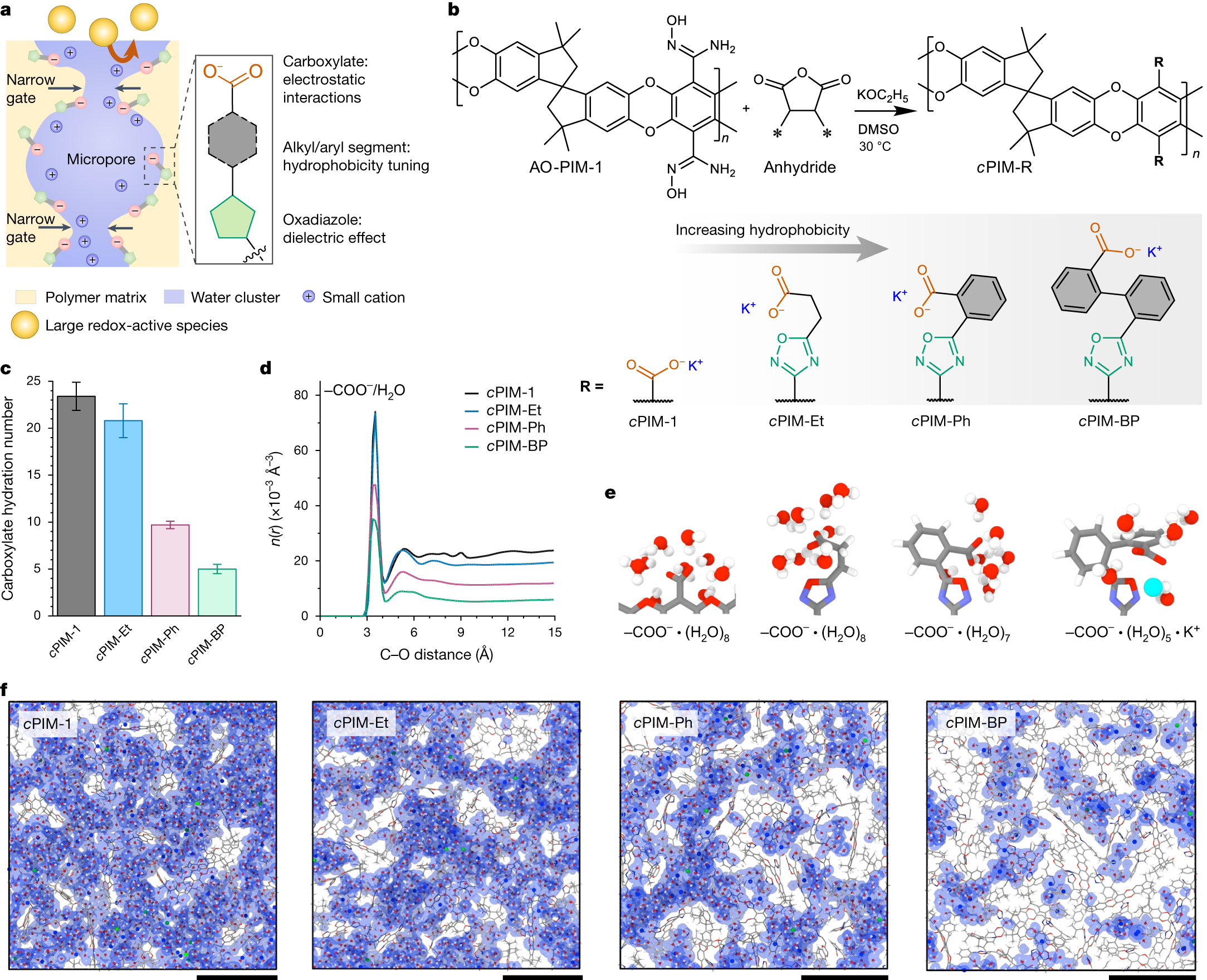
Anqi Wang*, Charlotte Breakwell, Fabrizia Foglia, Rui Tan, Louie Lovell, Xiaochu Wei, Toby Wong, Naiqi Meng, Haodong Li, Andrew Seel, Mona Sarter, Keenan Smith, Alberto Alvarez Fernandez, Mate Furedi, Stefan Guldin, Melanie Britton, Neil McKeown, Kim Jelfs, Qilei Song*. Selective ion transport through hydrated micropores in polymer membranes. Nature, 2024, 635, 353–358. ; Press release by 51吃瓜网 College.
Rui Tan, Anqi Wang, Hannah Pilsworth, Mengnan Wang, Irene Bechis, Charlotte Breakwell, Tongchao Liu, Alberto Alvarez Fernandez, Zhiyu Fan, Dezhi Liu, Shengming Zhang, Tomas Juergensen, Mengzheng Ouyang, Stefan Guldin, Wei Li, Thomas Bennett, Kim Jelfs, John Hanna, Anthony K. Cheetham, Qilei Song*. Monolithic semicrystalline metal-organic frameworks with selective ion and molecular transport channels. Nature Communications, under review.
Rui Tan*, Hongzhen He, Anqi Wang, Yilin Yang, Sunshine Iguodala, Chunchun Ye, Dezhi Liu, Zhiyu Fan, Mate Furedi, Guanjie He, Stefan Guldin, Dan J. L. Brett, Neil B. McKeown, Qilei Song*. Interfacial engineering of polymer membranes with intrinsic microporosity for dendrite-free zinc metal batteries. Angew Chem Int Ed. 2024, e202409322.
Christopher G. Cannon, Peter A. A. Klusener, Luke F. Petit, Toby Wong, Anqi Wang, Qilei Song, Nigel P. Brandon, Anthony R. J. Kucernak*. Methylene Blue in a High-Performance Hydrogen-Organic Rechargeable Fuel Cell. ACS Appl. Energy Mater. 2024, 7, 6, 2080–2087.
2023
Rui Tan, Anqi Wang, Chunchun Ye, Jiaxi Li, Dezhi Liu, Barbara Primera Darwich, Luke Petit, Zhiyu Fan, Toby Wong, Alberto Alvarez-Fernandez, Mate Furedi, Stefan Guldin, Charlotte E. Breakwell, Peter A. A. Klusener, Anthony R. Kucernak, Kim E. Jelfs, Neil B. McKeown, Qilei Song. Thin Film Composite Membranes with Regulated Crossover and Water Migration for Long-Life Aqueous Redox Flow Batteries. Advanced Science, 2023.

Anqi Wang, Rui Tan, Dezhi Liu, Jiaxin Lu, Xiaochu Wei, Alberto Alvarez-Fernandez, Chunchun Ye, Charlotte Breakwell, Stefan Guldin, Anthony R. Kucernak, Kim E. Jelfs, Nigel P. Brandon, Neil B. McKeown and Qilei Song*. Ion-selective Microporous Polymer Membranes with Hydrogen-bond and Salt-bridge Networks for Aqueous Organic Redox Flow Batteries. Advanced Materials, 2023, 2210098. Link to full paper:

2022
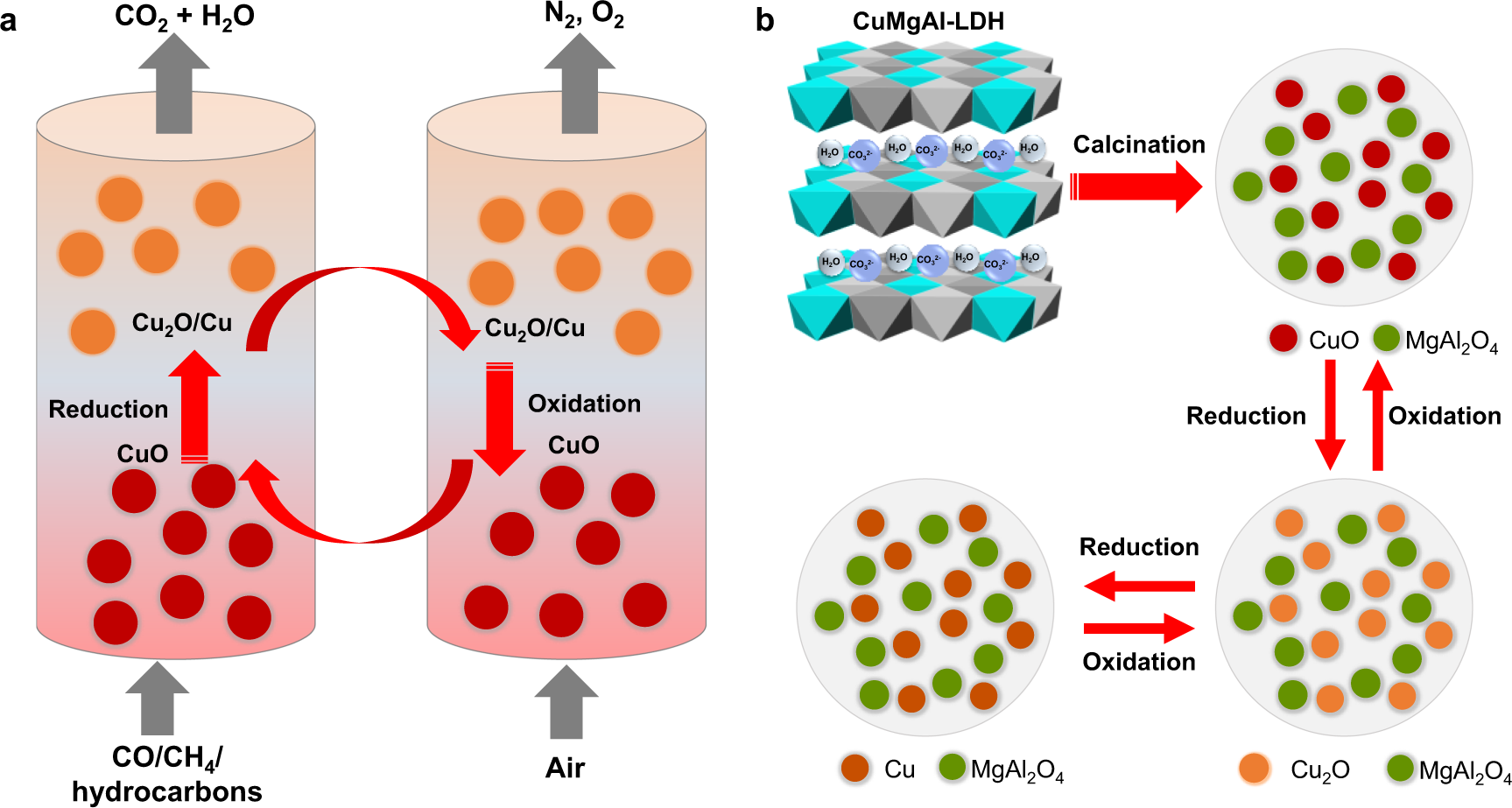
Michael High, Clemens F. Patzschke, Liya Zheng, Dewang Zeng, Oriol Gavalda-Diaz, Nan Ding, Ka Ho Horace Chien, Zili Zhang, George E. Wilson, Andrey V. Berenov, Stephen J. Skinner, Kyra L. Sedransk Campbell, Rui Xiao*, Paul S. Fennell* & Qilei Song*. Precursor engineering of hydrotalcite-derived redox sorbents for reversible and stable thermochemical oxygen storage. Nature Communications 13, 5109 (2022). . Check out the news on 51吃瓜网 College website.
 |
|---|
Michael High, Clemens F. Patzschke, Liya Zheng, Dewang Zeng, Rui Xiao, Paul S. Fennell, and Qilei Song*. Hydrotalcite-Derived Copper-Based Oxygen Carrier Materials for Efficient Chemical-Looping Combustion of Solid Fuels with CO2 Capture. Energy & Fuels 2022 36 (18), 11062-11076. .
 |
|---|
Anqi Wang, Rui Tan, Charlotte Breakwell, Xiaochu Wei, Zhiyu Fan, Chunchun Ye, Richard Malpass-Evans, Tao Liu, Martijn A. Zwijnenburg, Kim E. Jelfs, Neil B. McKeown*, Jun Chen, and Qilei Song*. Solution-Processable Redox-Active Polymers of Intrinsic Microporosity for Electrochemical Energy Storage. Journal of the American Chemical Society 2022 144 (37), 17198-17208. . Check out the new release on the 51吃瓜网 website.

C. Ye, R. Tan, A. Wang, J. Chen, B. Comesa?a Gándara, C. Breakwell, A. Alvarez-Fernandez, Z. Fan, J. Weng, C. G. Bezzu, S. Guldin, N. P. Brandon, A. R. Kucernak, K. E. Jelfs, N. B. McKeown*, Q. Song*, Long-Life Aqueous Organic Redox Flow Batteries Enabled by Amidoxime-Functionalized Ion-Selective Polymer Membranes. Angew. Chem. Int. Ed. 2022, 61, e202207580; Angew. Chem. 2022, 134, e202207580. .

Chunchun Ye, Anqi Wang, Charlotte Breakwell, Rui Tan, C. Grazia Bezzu, Elwin Hunter-Sellars, Daryl R. Williams, Nigel P. Brandon, Peter A. A. Klusener, Anthony R. Kucernak, Kim E. Jelfs, Neil B. McKeown* & Qilei Song*. Development of efficient aqueous organic redox flow batteries using ion-sieving sulfonated polymer membranes. Nature Communications, 13, Article number: 3184 (2022). .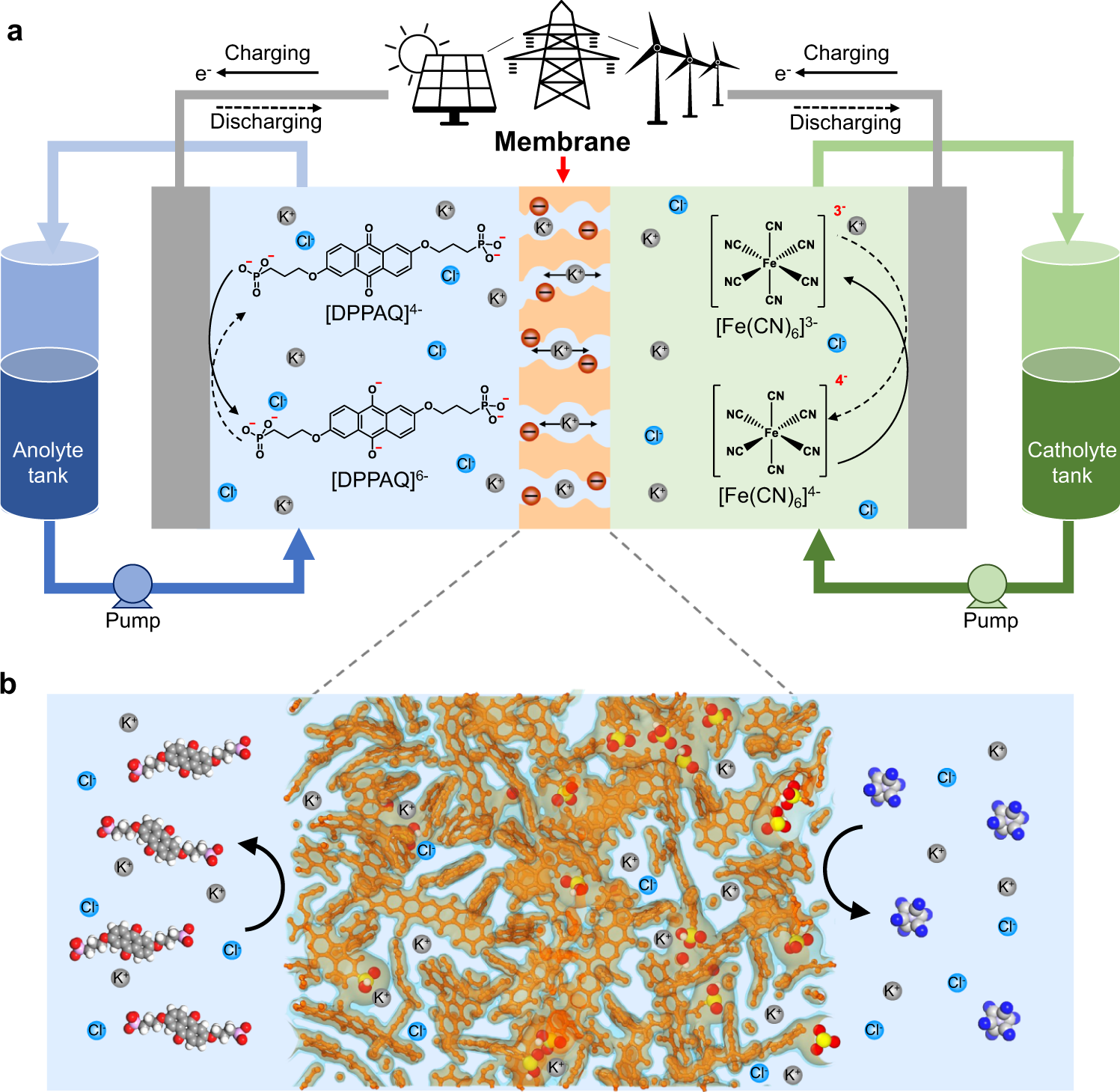
| Ion-selective membranes for aqueous organic redox flow batteries |
Katherine Mizrahi Rodriguez, Wan-Ni Wu, Taliehsadat Alebrahim, Yiming Cao, Benny D Freeman, Daniel Harrigan, Mayank Jhalaria, Adam Kratochvil, Sanat Kumar, Won Hee Lee, Young Moo Lee, Haiqing Lin, Julian M Richardson, Qilei Song, Benjamin Sundell, Raymond Thür, Ivo Vankelecom, Anqi Wang, Lina Wang, Catherine Wiscount, Zachary P Smith. Multi-lab study on the pure-gas permeation of commercial polysulfone (PSf) membranes: Measurement standards and best practices. Journal of Membrane Science. 659, 2022, 120746. . .
Yuhua Xia, Mengzheng Ouyang, Vladimir Yufit, Rui Tan, Anna Regoutz, Anqi Wang, Wenjie Mao, Barun Chakrabarti, Ashkan Kavei, Qilei Song, Anthony R. Kucernak & Nigel P. Brandon. A cost-effective alkaline polysulfide-air redox flow battery enabled by a dual-membrane cell architecture. Nature Communications, 13, 2388, 2022. (open access).

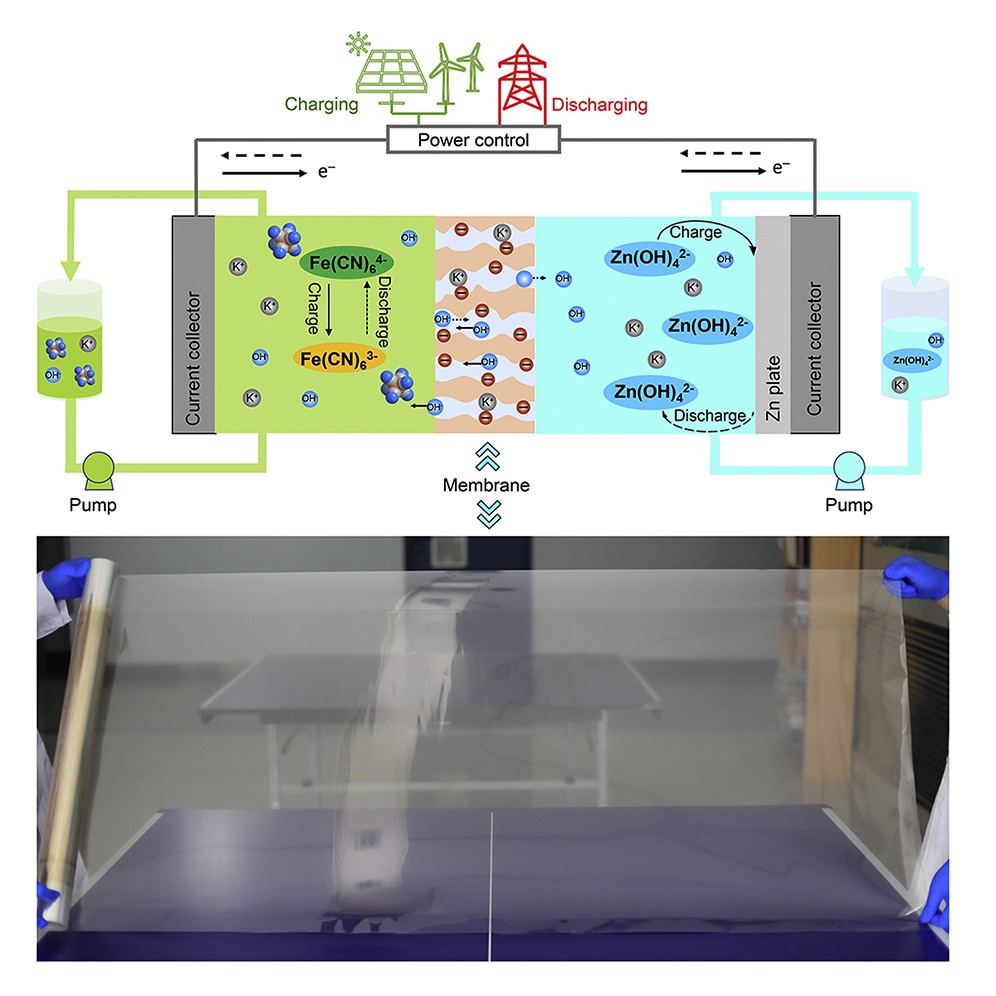
Zhizhang Yuan, Lixin Liang, Qing Dai, Tianyu Li, Qilei Song, Huamin Zhang, Guangjin Hou, and Xianfeng Li*, Low-Cost Hydrocarbon Membrane Enables Commercial-Scale Alkaline-Based Flow Batteries for Long-Duration Energy Storage. Joule, 6, 884-905, 2022. . This paper reports roll-to-roll manufacturing of meter square-sized low-cost membranes and applications in kW-scale flow battery stacks, for long-duration energy storage.
2021
Clemens F. Patzschke, Matthew E.Boot-Handford, Qilei Song, Paul S. Fennell*. Co-precipitated Cu-Mn mixed metal oxides as oxygen carriers for chemical looping processes. Chemical Engineering Journal. 2021, 407, 127093. .
2020
Peipei Zuo, Yuanyuan Li, Anqi Wang, Rui Tan, Yahua Liu, Xian Liang, Fangmeng Sheng, Gonggeng Tang, Liang Ge, Liang Wu, Qilei Song*, Neil B McKeown*, Zhengjin Yang*, Tongwen Xu*. Sulfonated microporous polymer membranes with fast and selective ion transport for electrochemical energy conversion and storage. Angewandte Chemie International Edition. 2020, 59, 9564.

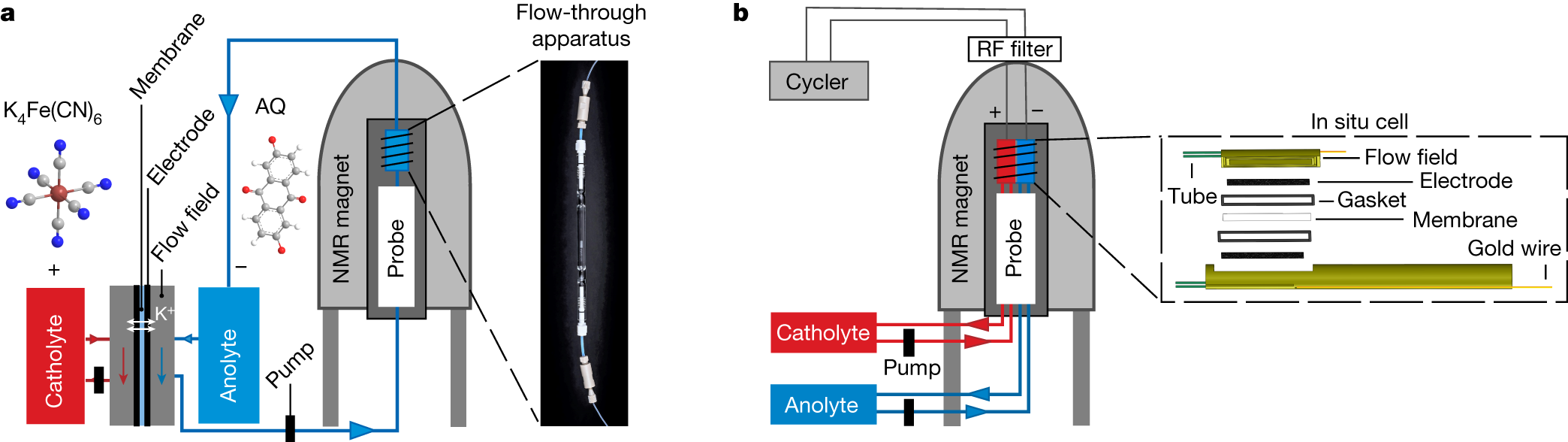
Evan Wenbo Zhao, Tao Liu, Erlendur Jónsson, Jeongjae Lee, Israel Temprano, Rajesh B. Jethwa, Anqi Wang, Holly Smith, Javier Carretero-González, Qilei Song & Clare P. Grey*. In situ NMR metrology reveals reaction mechanisms in redox flow batteries. Nature 579, 224–228(2020).
Link to the paper:
Rui Tan+, Anqi Wang+, Richard Malpass-Evans, Rhodri Williams, Evan Wenbo Zhao, Tao Liu, Chunchun Ye, Xiaoqun Zhou, Barbara Primera Darwich, Zhiyu Fan, Lukas Turcani, Edward Jackson, Linjiang Chen, Samantha Y. Chong, Tao Li, Kim E. Jelfs, Andrew I. Cooper, Nigel P. Brandon, Clare P. Grey, Neil B. McKeown*, and Qilei Song*. Hydrophilic microporous membranes for selective ion separation and flow-battery energy storage. Nature Materials, 19, 195–202(2020). doi:. (+contributed equally).
- Press release by 51吃瓜网 College: New membrane technology to boost water purification and energy storage
- Media coverage:

2019
Edward Jackson, Marcin Miklitz, Qilei Song, Gareth A. Tribello, and Kim E. Jelfs. A Computational Evaluation of the Diffusion Mechanisms for C8 Aromatics in Porous Organic Cages. J. Phys. Chem. C, 2019, 123, 34, 21011-21021.

2018
Baaden M, Barboiu M, Bill RM, , 2018, , Faraday Discuss, Vol: 209, Pages: 205-229.
Baaden M, Barboiu M, Borthakur MP, , 2018, , Faraday Discuss, Vol: 209, Pages: 389-414.
Baaden M, Borthakur MP, Casanova S, , 2018, , Faraday Discuss, Vol: 209, Pages: 273-285.
Madrid, E, Lowe, J, Msayib, KJ, Mckeown, NB, Song, Q, Attard, GA, Duren, T & Marken, F. Triphasic Nature of Polymers of Intrinsic Microporosity (PIM-1 and PIM-PY) Induces Storage and Catalysis Effects in Hydrogen and Oxygen Reactivity at Electrode Surfaces. ChemElectroChem. 2018, DOI: .
2017
Ghalei B, Sakurai K, Kinoshita Y, , , Nature Energy. volume 2, Article number: 17086 (2017). Doi:

Shan Jiang, Qilei Song,* Alan Massey, Samantha Y. Chong, Linjiang Chen, Shijing Sun, Tom Hasell,* Rasmita Raval, Easan Sivaniah, Anthony K. Cheetham, Andrew I. Cooper*, , Angew. chem. Int. Ed., 2017, 56, 9391. Doi:

2016
Y. Rong, Q. Song, K. Mathwig, E. Madrid, D. He, R. G. Niemann, P. J. Cameron, S. EC Dale, S. Bending, M. Carta, R. Malpass-Evans, N. B. McKeown, F. Marken. . Electrochemistry Communications, 2016, 69, 41-45.

Maria Jimenez-Solomon+, Qilei Song+, Kim Jelfs, Marta Munoz-Ibanez, Andrew Livingston*. . Nature Materials. 2016. 15, 760-767. Doi:10.1038/nmat4638. (+Contributed equally).
- Press release by 51吃瓜网 College:
- Media coverage: | |
- Highlight: by Prof. Neil McKeown at University of Edinburgh.
- Highlight in IChemE's

Q. Song, S. Jiang, T. Hasell, M. Liu, S. Sun, A.K. Cheetham, E. Sivaniah, A.I. Cooper. . Advanced Materials. 2016, 13, 2629-2637. DOI:10.1002/adma.201505688. Featured on .
In collaboration with the group of at Liverpool, we fabricate Porous Organic Cages (POCs), a new class of microporous molecular materials, to thin films and selective molecular sieving membranes.
Q. Song, S. Cao, R.H. Pritchard, H. Qiblawey, E.M. Terentjev, A.K. Cheetham, and E. Sivaniah. . Journal of Materials Chemistry A. 2016,4, 270-279. DOI: 10.1039/C5TA09060A.
Microporous polymers with molecular sieving properties are promising for a wide range of applications in gas storage, molecular separations, catalysis, and energy storage. In this study, we report highly permeable and selective molecular sieves fabricated from crosslinked polymers of intrinsic microporosity (PIMs) incorporated with highly dispersed nanoscale fillers, including nonporous inorganic nanoparticles and microporous metal-organic framework (MOF) nanocrystals.
We demonstrate that the combination of covalent crosslinking of microporous polymers via controlled thermal oxidation and tunable incorporation of nanofillers results in high performance membranes with substantially enhanced permeability and molecular sieving selectivity, as demonstrated in separation of gas molecules, for example, air separation (O2/N2), CO2 separation from natural gas (CH4) or flue gas (CO2/N2), and H2 separation from N2 and CH4.
After ageing over two years, these nanofiller-tuned molecular sieves became more selective and less permeable but maintained permeability levels that are still two orders of magnitude higher than conventional gas separation membranes.

2015
D. Di, K.P. Musselman, G. Li, A. Sadhanala, Y. Ievskaya, Q. Song, Z. Tan, M. L. Lai, J.L. MacManus-Driscoll, N.C. Greenham, R.H. Friend. . The Journal of Physical Chemistry Letters, 2015, 6, 446-450.

D.H.N. Perera, Q. Song, H. Qiblawey, E. Sivaniah. . Journal of Membrane Science. 2015, 487, 74-82.
Polyamide thin film composite (PA-TFC) membranes are synthesized from interfacial polymerization via the established polymer chemistry (a) as shown in the figure below. The SEM iamges show the morphology of surface (b) and cross-section (c) of ultrathin polyamide thin films supported on polysulfone membranes. These nanofilm membranes show relatively higher water permeance and high rejection of ions in water desalination applications.
2014
Q. Song, S. Cao, R.H. Pritchard, B. Ghalei, S.A. Al-Muhtaseb, E.M. Terentjev, A.K. Cheetham, and E. Sivaniah. . Nature Communications, 2014, 5, 4813. | | | and | | and |
(Note: these media coverages are mainly on CO2 capture applications, but actually these novel microporous polymers have great potential for more broad applications beyond gas separations, and our understandings of the materials science are more important.)

Microporous materials with well-defined micropore (pore dimensions below 2 nm) structure are attractive next-generation materials for gas sorption, storage, catalysis and molecular level separations.
Polymers of intrinsic microporosity (PIMs) contain interconnected regions of micropores with high gas permeability but with a level of heterogeneity that compromises their molecular selectivity.
Here we report controllable thermal oxidative crosslinking of PIMs by heat treatment in the presence of trace amounts of oxygen. The resulting covalently crosslinked networks are thermally and chemically stable, mechanically flexible and have remarkable selectivity at permeability that is three orders of magnitude higher than commercial polymeric membranes.
This study demonstrates that controlled thermochemical reactions can delicately tune the topological structure of channels and pores within microporous polymers and their molecular sieving properties.
(inventors: Q. Song and E. Sivaniah) has been filed based on the work reported in this paper.
2013
Q. Song, S. Cao, P. Zavala-Rivera, L.P. Lu, W. Li, Y. Ji, S.A. Al-Muhtaseb, A.K. Cheetham and E. Sivaniah. . Nature Communications, 2013, 4, 1918. | | | | |
We report photo-oxidation of membranes made of a polymer of intrinsic microporosity (PIMs) and demonstrate how UV light can degrade the polymer while enhancing the selectivity in gas separation. The ultraviolet light field, localized to a near-surface domain, induces reactive ozone that collapses the microporous polymer framework. The rapid, near-surface densification results in asymmetric membranes with a superior selectivity in gas separation while maintaining and apparent permeability that is two orders of magnitude greater than commercially available polymeric membranes. In fact, the gas transport properties need to be considered carefully because the membranes now become heterogeneous composite films. The oxidative chain scission induced by ultraviolet irradiation also indicates the potential application of the polymer in photolithography technology. The key scientific understanding is the oxidative degradation of PIM-1 polymer under irradiation of shortwave-length UV light, which has broad implications on the applications of porous PIM-1 polymers.
A further finding not reported in the paper is that similar oxidative degradation can occur directly by ozone treatment, which induces densification at the surface, depending on the diffusion of ozone in the polymer network. These work were covered in my PhD thesis 'Polymer molecular sieve membranes'.
Story behind the paper....

When we synthesized the PIM-1 polymer in early 2011, we were initially interested in the optoelectronic properties. In collaboration with the optoelectronics group in the Cavendish lab (Prof. R.H. Friend group), we fabricated polymer light emittting diodes (PLED) devices and confirmed the electroluminenscence of PIM-1 polymer. However, the performance is not that great, and the science behind this phenomenon were not well understood.
It was later known that the inventors of PIM-1 polymer did similar research on PLED when they invented the materials 10 years ago! While I was working on polymer films and membranes, we realized that there are a lot of literature on photoprocessing of polymers in polymer science field and membrane field as well. This leads to our work on understanding the science behind the phenomenon and how the UV/ozone treatment of PIM-1 polymer changed the physical properties, including the gas transport properties.
We reported the story in a 3-page conference paper submitted to Euromembrane conference in March 2012, but it took us sometime to understand the mechanism well, therefore the publication of our paper were delayed until 2013. In the end, we have a better understanding of the materials.
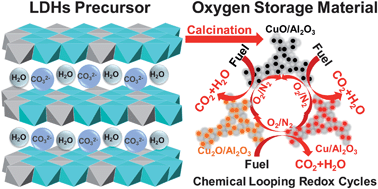
Q. Song, W. Liu, C. D. Bohn, R. N. Harper, E. Sivaniah, S. A. Scott and J. S. Dennis. A high performance oxygen storage material for chemical looping processes with CO2 capture, Energy & Environmental Science, 2013, 6, 288-298.
We report a method for preparing of oxygen storage materials from layered double hydroxides(LDHs) precursors and demonstrate their applications in the CLC process. The LDHs precursor enables homogeneous mixing of elements at the molecular level, giving a high degree of dispersion and high-loading of active metal oxide in the support after calcination.
Using a Cu-Al LDH precursor as a prototype, we demonstrate that rational design of oxygen storage materials by material chemistry significantly improved the reactivity and stability in the high temperature redox cycles. A representative nanostructured Cu-based oxygen storage material derived from the LDH precursor showed stable gaseous O2release capacity (5 wt%), stable oxygen storage capacity (12 wt%), and stable reaction rates during reversible phase changes between CuO-Cu2O-Cu at high temperatures.
We anticipate that the strategy can be extended to manufacture a variety of metal oxidecomposites for applications in novel high temperature looping cycles for clean energy production.
2012
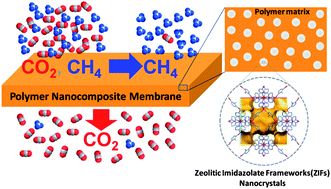
Q. Song, S. K. Nataraj, M. V. Roussenova, J. C. Tan, D. J. Hughes, W. Li, P. Bourgoin, M. A. Alam, A. K. Cheetham, S. A. Al-Muhtaseb and E. Sivaniah. , Energy & Environmental Science, 2012, 5, 8359-8369.
As-synthesised zeolitic imidazolate framework (ZIF-8) nanocrystals were dispersed into a polymer matrix forming nanocomposite membranes with enhanced gas permeability.
Publications
A full list of publications can be found at: